

Kitchen rugs and runners are a whole different beast from what you may be used to in the living room or bedroom. Style is all well and good, but a kitchen rug needs to hold up to spills, splashes, crumbs, grease, and all the foot traffic of your entire home without becoming a tripping hazard or cleaning nightmare.
I’ve tested and researched dozens of rugs for this kitchen guide and one thing is certain. The best kitchen rugs and runners put easy cleaning, washability, and slip resistance first and design second.
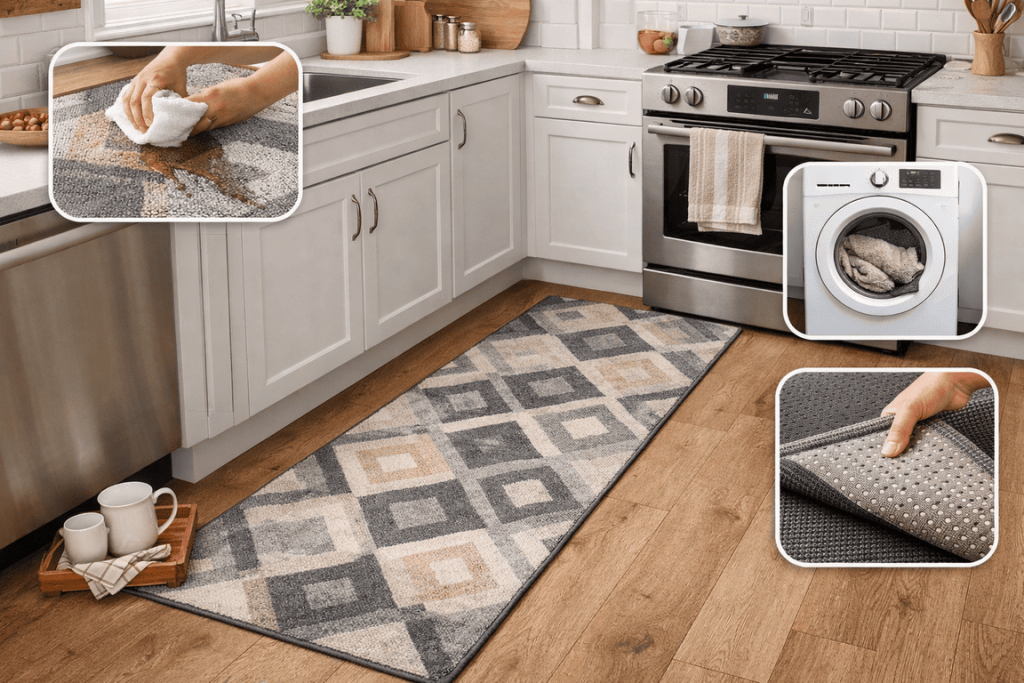
In this post, I’ll run through what actually matters when shopping for a kitchen rug, where runners make more sense than area rugs, and which materials work best in real kitchens.
Whether you cook daily, make messes, or just want something cushier underfoot while doing dishes, this kitchen rug buyer’s guide will help you find a rug that holds up over time.
Kitchen Rug Buyer’s Guide
Why Kitchen Rugs Need Special Consideration
The kitchen is one of the most challenging environments for any home rug. Unlike other rooms, the floor gets splashed, dripped on, and splattered constantly.
Food debris, moisture, and spills are normal. The floor temperature may fluctuate more than anywhere else in the home too.
A rug that works in a bedroom or living room may become impractical or even unsafe in the kitchen.
Common Issues With Kitchen Rugs
The most common problems are staining, curling, slipping, and odors. These issues are why high-pile, wool, or otherwise luxurious rugs are usually a poor fit in the kitchen.
Basics of a Good Kitchen Rug
A good kitchen rug has to be easy to clean, safe to walk on, and durable enough to not wear out too quickly in high traffic.
Kitchen Rugs vs Kitchen Runners
Before we get into materials and specific features, I want to quickly clarify the difference between choosing a kitchen rug vs kitchen runner.
Kitchen runners are the long, narrow rugs that work especially well along galley kitchens or counters and islands. A kitchen runner provides cushy comfort in all the spots where you’ll be standing most.
Runners are a great choice when:
- You have a narrow kitchen or have long runs of countertop
- You want something soft to stand on while cooking or washing dishes
- You want to visually elongate the kitchen space
Runners are most often between 2 and 3 feet wide and 6 to 10 feet long. Length is important because a runner that is too short looks awkward while one that is too long can bunch up near doorways or appliances.
Standard Kitchen Rugs
A more typical kitchen rug works better in larger kitchens or eat-in kitchens/open layouts where you want to visually and physically define a specific zone.
Standard kitchen rugs are better when you:
- Have a wider or open kitchen layout
- Want to anchor a breakfast nook or prep zone
- Prefer a more decorative rug
No matter the shape, the same performance characteristics are true. Washable, low-pile, and anti-slip design is far more important than how thick or luxurious a material is.
Materials for Easy-Clean Kitchen Rugs
The material is the single biggest factor in determining how practical a kitchen rug will be. Some materials are far more functional in messy, high-traffic environments.
Synthetic Fibers: The Most Practical
Polypropylene, polyester, and nylon are the most common materials in modern kitchen rugs and for good reason. All three resist stains, do not absorb moisture, and are far easier to clean than natural fibers.
Polypropylene is the standout performer for kitchen use. It is lightweight, strong, and does not retain odors. Spills sit on top of the material rather than soaking in, making quick cleanups easy.
Polyester tends to be softer underfoot and often has better colorfastness. However, it can show wear a little faster in very high-traffic areas.
Nylon is durable and resilient but is usually found in higher-priced or commercial style rugs.
Cotton: Machine Washable but Not Super Durable
Cotton kitchen rugs are a popular choice because they are easy to throw in the washer and clean. However, they absorb moisture and stains more easily than synthetics and wear out faster in busy kitchens.
Cotton is best in low-traffic kitchens or where spills are not as much of an issue. If you do choose cotton, pick tightly woven options with reinforced edges to prevent fraying.
Materials to Avoid in Kitchens
Wool rugs, jute, sisal, and shag style rugs are almost never good choices for kitchens. Wool absorbs moisture and stains easily, while natural fibers like jute and sisal literally fall apart with spills and moisture.
Curly or thick pile rugs trap crumbs and are harder to clean.
Washable Kitchen Rugs
Washability has become one of the most important features for kitchen rugs, but not all washable rugs are created equal.
Some rugs are technically washable, but only fit in commercial washers or require hand washing. Others can stand up to frequent washing without losing shape or anti-slip grip.
Here are some things to look for when assessing washable kitchen rugs.
First, is the rug machine washable at home or does it require a commercial washer? Lightweight rugs with flexible backing are a must.
Second, how often do you think you will actually be washing it? A rug in front of the sink may need a washing every few weeks while a runner along a prep area might go longer between cleanings.
Finally, does the rug dry quickly? Materials that hold water will take a full day or longer to dry, which is more trouble than it’s worth in the kitchen.
Rugs with thin profiles and synthetic fibers always work best in the long run.
Anti-Slip Features That Work
Slip resistance is non-negotiable in the kitchen. A rug that moves underfoot is a trip hazard, especially around sinks and stoves.
Two main approaches to anti-slip design are in use.
Built-In Non-Slip Backing
Most modern kitchen rugs come with rubber or latex backing that grips the floor. These are convenient because they don’t require a separate rug pad.
Not all non-slip backing is created equal though. Cheap rubber can crack over time or leave residue on floors. Look for backing that is flexible, well applied, and specifically labeled for use on hardwood or tile.
Rugs That Use a Rug Pad
Some thinner rugs use a separate rug pad with non-slip backing. This is a little more work, but you get to choose a higher quality pad and replace it separately when it wears out.
If you go this route, make sure the pad is cut slightly smaller than the rug. This keeps it hidden and prevents the rug from curling at the edges.
Low-Pile vs Flatweave
In a kitchen, thin is always better.
Low-pile rugs have just a little bit of cushioning without the debris-trapping problem of thicker rugs. They are also easier to vacuum and don’t make it as hard to open appliance doors.
Flatweave rugs are even better since they literally have no pile. Crumbs and spills sit on top of the rug making cleanup a breeze. Flatweaves also dry faster when they get wet.
If you spend a long time on your feet while cooking, a low-pile runner with a little cushioning may be more comfortable. Otherwise, flatweave is the most low-maintenance option.
Style Tips for Kitchens
Style is not the primary factor, but that does not mean your kitchen rug has to be boring.
Patterns hide stains and wear better than solid colors. Subtle geometric, distressed, or small repeating patterns are especially forgiving.
Dark tones and mid-range neutrals are also better than very light colors. Cream and white rugs can look great, but they also show stains quickly in the kitchen.
A strong rug can be a nice contrast to a kitchen that already has strong visual elements like bold cabinetry or countertops. If your kitchen is more neutral, a runner is a good way to add a pop of color without committing to a permanent change.
Mistakes to Avoid
One of the biggest mistakes is picking a rug that is too thick. Thick rugs trap crumbs, move more, and make it more difficult to open appliance doors.
Another mistake is putting the rug in a location that will constantly get soaked like directly under a leaky sink or dishwasher. Even washable rugs degrade faster with constant moisture.
Do not choose rugs that require professional cleaning. Kitchen rugs have no patience for that.
Final Thoughts
The best kitchen rugs and runners are not the fanciest or most expensive. They are the ones that quietly do their job day after day.
Pick washable materials, low-profile design, and reliable slip resistance. Choose runners for narrow or high-use areas and rugs for larger zones where you want comfort and visual structure.
If a rug makes you hesitate when something spills, it is probably the wrong rug for your kitchen.
The right kitchen rug should make the space more comfortable, safer to walk on, and easier to live with. When you find a rug that does all three, you will wonder why you waited so long to add it.
Leave a Comment