

Area rugs are one of those rare consumer goods that people rarely question. They instantly make a room feel cozy, muted, and finished. When you’re living with rugs on a day-to-day basis—particularly households with kids, pets, or allergy concerns—these concerns quickly take a backseat to keeping them safe.
I started RugTested because we began asking questions about rugs in our own homes. Odors coming out of the packaging, slippery backing on hardwood floors, fibers shedding where they shouldn’t. Rug maintenance problems are one thing. But some of these issues are signs of legitimate health and safety hazards.
Here’s what we’ve learned about safe area rugs. What to look for in rug materials and certifications, and what warnings to take seriously.

- How Do You Define “Safe” for Area Rugs?
- The Materials Used in Area Rugs + Their Safety Ratings
- Rug Certifications to Look For (& Which to Avoid)
- Rug Safety Tips
- Ventilation, VOCs, and Rug Smells
- Safety Tips for Kids and Pets
- Rug Backing Dangers (Slipping)
- Greenwashing and Unclear Rug Claims
- Safety Standards We Follow at RugTested
- The Bottom Line
How Do You Define “Safe” for Area Rugs?
An area rug can’t be safe based on one material factor or certification. Safety is determined by how the rug will affect your body, your air quality, and your space over time.
Ideally, rugs should meet four basic safety criteria:
- They should not emit high levels of toxins into your home.
- They should not have physical safety hazards like slipping or excessive shedding.
- They should be safe for use by infants, toddlers, and pets.
- They should hold up over time without quickly deteriorating into fiber piles, backing dust, or crumbling padding.
Yes, rugs can pass two of these tests and fail the others. Which is why you should never rely on marketing claims alone.
The Materials Used in Area Rugs + Their Safety Ratings
No rug material is perfect, and they all age differently inside your home. Some hold up well for years, while others may off-gas, shed, or degrade quicker than you’d expect.
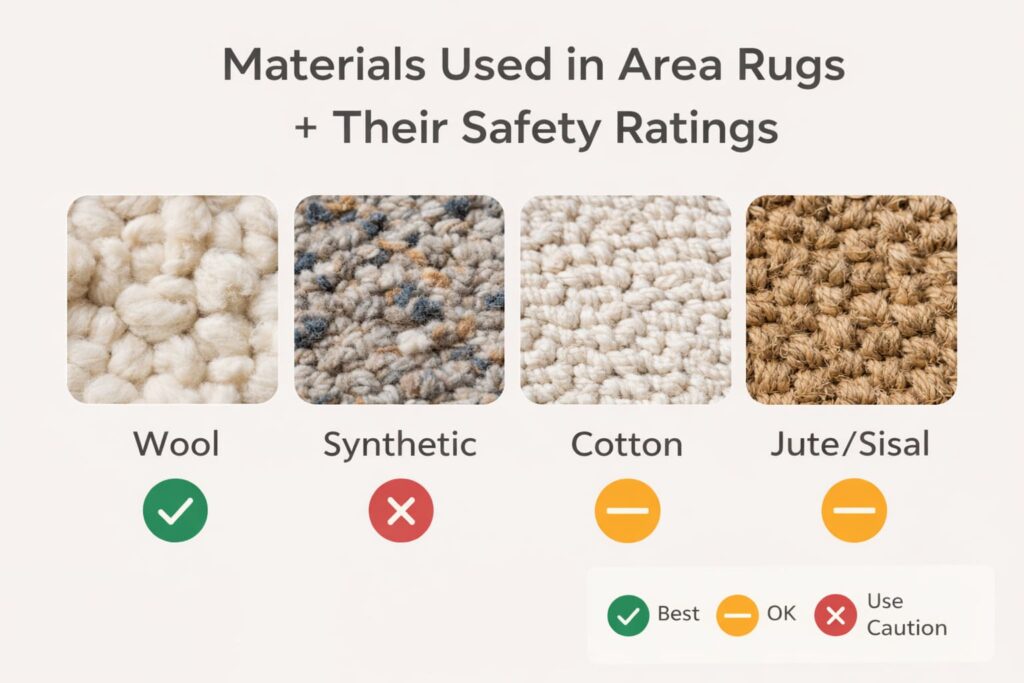
Wool
When properly processed, wool is one of the safest rug materials available naturally. It’s naturally flame resistant, durable, and doesn’t need to be chemically treated to perform.
Wools can be treated with harsh dyes and stain repellents though. Wool rugs can also shed excessively at first (annoying for allergy sufferers).
Responsibly sourced wool finished without excess chemicals is usually a safe bet.
Cotton
Cotton rugs are typically soft, breathable, and contain fewer chemicals than synthetic rugs. They’re also easier to wash than most wool rugs, making them great for kitchens, nurseries, and casual rooms.
Their downfall is durability. Cotton breaks down faster than most rug fibers, and releases lint and dust more quickly as it ages.
Chemically speaking, cotton rugs are typically low-risk but may not age as well.
Synthetic (Polyester, Polypropylene, Nylon)
Synthetic rugs are everywhere because they’re cheap to produce, stain resistant, and available in endless colors and prints. Synthetic rugs can be safe, but it depends on how they’re made.
Low-quality synthetics may off-gas VOCs (you’ll notice this as a strong “new rug” smell). Additionally, some rug backings and glues used to make synthetics are more prone to off-gassing.
Higher-quality rugs that carry a reputable safety certification are fine for most households, but always do your research. Trusted certifications are important when it comes to synthetics.
Jute, Sisal, Natural Fibers
Natural fiber rugs are often made with eco-friendly materials in mind. Jute, sisal, and other natural fibers are typically untreated or lightly treated. This leads to lower levels of chemical exposure but also creates rugs that are rougher to the touch, retain moisture, and trap dust and allergens.
This style of rug is usually as safe as it gets chemically. But they may not be ideal if you have babies, pets, or live in humid climates.
Rug Certifications to Look For (& Which to Avoid)
Certifications are intended to limit guesswork but don’t all mean the same thing.
OEKO-TEX Standard 100
In our opinion, this is the gold standard for rugs. OEKO-TEX Standard 100 tests finished rugs for harmful chemicals including heavy metals, pesticides, and more.
If your rug has this certification, it’s been laboratory tested for human health. This is especially important for synthetics and children’s rugs.
Low-VOC certifications
Some manufacturers will claim their rugs are low-VOC without being certified. This isn’t a bad thing, but there’s less accountability.
A strong chemical odor that persists for months is almost always an indicator that VOCs are higher than you think.
Rug Safety Tips
It sounds like a harmless word, but “eco-friendly” means nothing by itself. You can purchase rugs that use all-natural materials loaded with toxins, but market them as “eco”.
Be careful of fiberglass padding, rubber/latex backing rugs, and anything touting large scale agricultural sources like bamboo or jute.
Many of these materials can be safe when used correctly, but there are rare cases where they’re used dangerously.
Ventilation, VOCs, and Rug Smells
Your nose knows.
If a rug smells like chemical dumping ground when you unroll it, it’s emitting VOCs into your home. Some people tolerate these chemicals just fine short-term, but they can trigger headaches, sickness, and irritation.
Long-term health effects of VOCs are hard to measure, so we prefer as few as possible in our homes.
When you open your rug and it still smells strongly weeks later, that is abnormal. New rug smell should fade in a few days. Constant odor is cause for concern.
Safety Tips for Kids and Pets
Kids and pets tend to put a lot of wear on rugs in ways you might not expect.
Baby’s drag their faces across rugs while learning to crawl. Toddlers sit, lay, and tumble onto flooring. Pets chew on edges, scratch, and sleep on rugs.
Things like slip resistance and fiber damage are important in homes with pets or small children. Having a rug that sheds into food or slips while someone is running becomes an injury risk.
Can you wash a rug? Are there easy ways to rinse out odor and bacteria? For homes with pets and small children, washability is a safety concern.
Rug Backing Dangers (Slipping)
While we’re talking about injuries, rugs are notorious for causing slips and falls.
The rug itself isn’t always the problem. Rug backings cause a lot of issues.
Some rubber/latex rug backings break down over time and leave a residue on your floors. Foam and latex backing may also reduce slipperiness as they age.
Flat weave rugs are beautiful and typically safe. But thrown rugs with unfinished backings are risky on hardwood and tiled floors.
If your rug won’t stay put, try a dedicated rug pad made from a non-crumbly material instead. Quality rug pads can also help with insulation and moisture protection.
Greenwashing and Unclear Rug Claims
Here are a few terms that sound good but aren’t great on their own.
“Non-toxic”
Non-toxic is a fantastic goal. But some “non-toxic” rugs are still loaded with chemicals with unclear health effects.
“Eco”
Similar to our note above, being eco-friendly doesn’t give us any information about a rug’s safety.
“Kid-safe”
Kids should be able to crawl on anything in your house, but that doesn’t mean every rug is suitable for child-friendly spaces. Material transparency is important.
Safety Standards We Follow at RugTested
Rug testing doesn’t stop at customer reviews. We pay attention to odor levels when new, how much rugs shed after testing, backings abilities to attach to floors, wash instructions/rug performance during washing, and more.
A rug can pass all our abuse tests but fail to list what it’s made of. For us, that’s a failure too.
Area rugs don’t have to be perfect. But when you’re spending several hundred dollars on a rug that should last for years, you should know how it will perform inside your home.
The Bottom Line
Are area rugs safe? Most of them are fine. But composition, processing, and manufacturing can impact how rugs behave long after you bring them home.
Knowing what safe-to-look-for and dangerous characteristics lets you choose rugs that will stand the test of time without invading your living space.
Leave a Comment